Start here
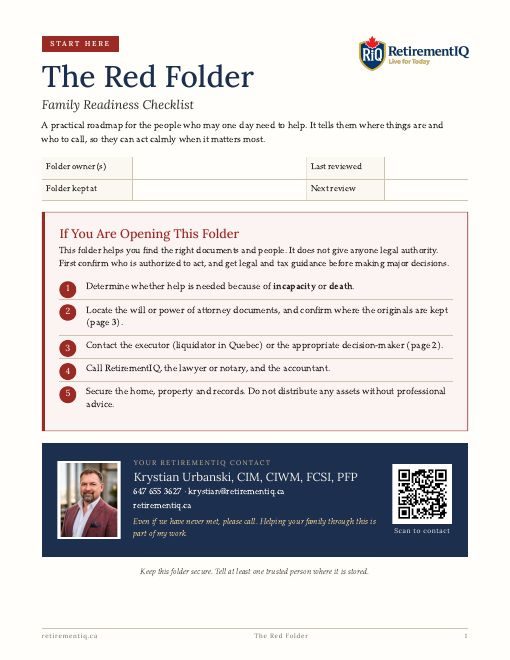
Five calm first steps for whoever opens the folder, and who to call.

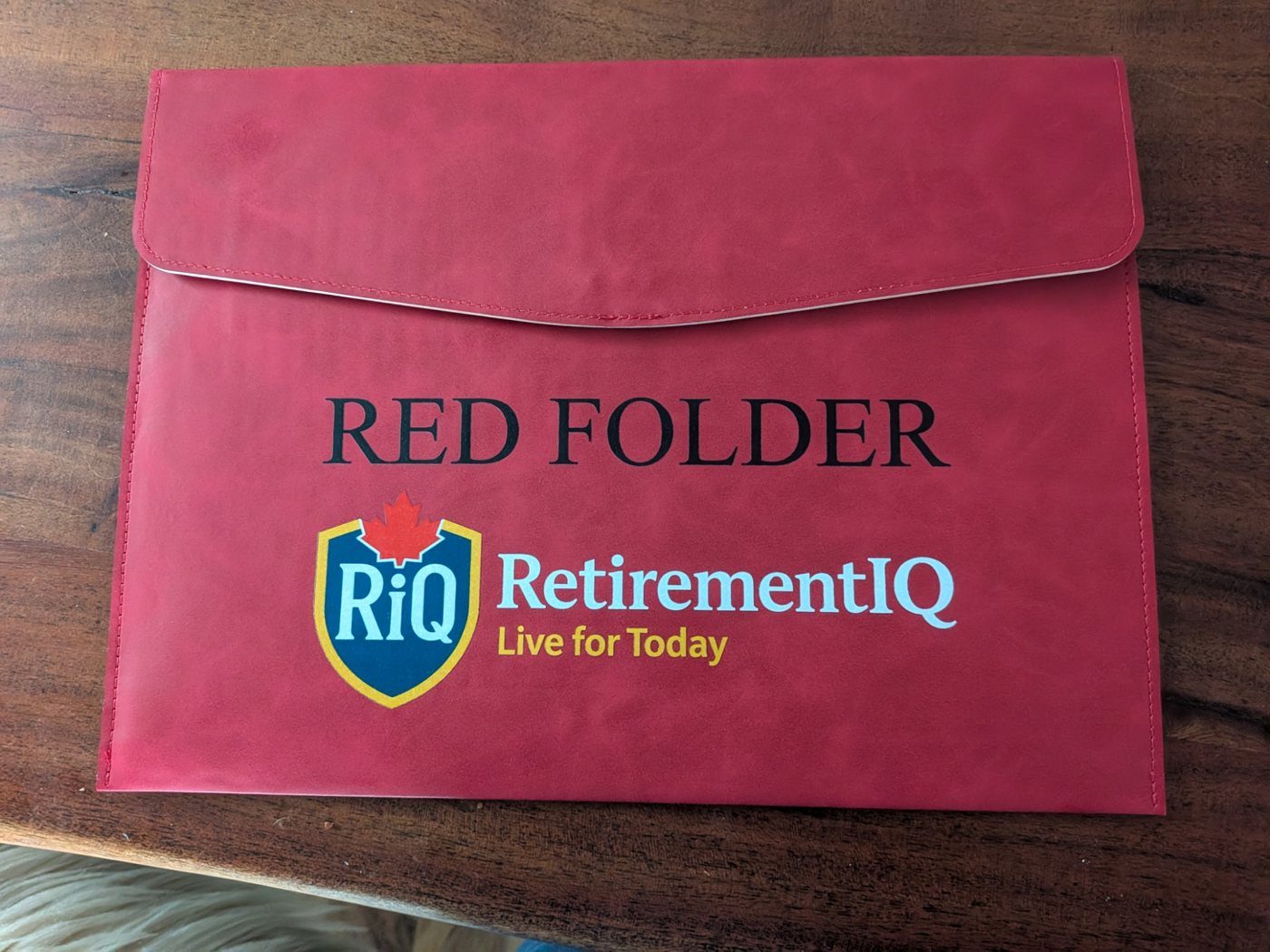
One folder that tells the people you love where everything is and who to call, so they can act calmly in the hardest week of their lives.
 Ask your parents where theirs is
When someone becomes ill or passes away, the people left behind are suddenly asked to find a will, reach a lawyer, notify banks and pensions, pay the bills and make decisions, often without knowing what exists or where it is.
Grief makes all of it harder. The Red Folder does not remove the loss. It removes the searching.
“Do your children know where your will is, who your executor is and which accounts you have? If not, that is the folder.”
A practical checklist you fill in by hand and keep with copies of your key documents. It takes an afternoon, and it may be the most thoughtful thing you ever leave behind.
Five calm first steps for whoever opens the folder, and who to call.
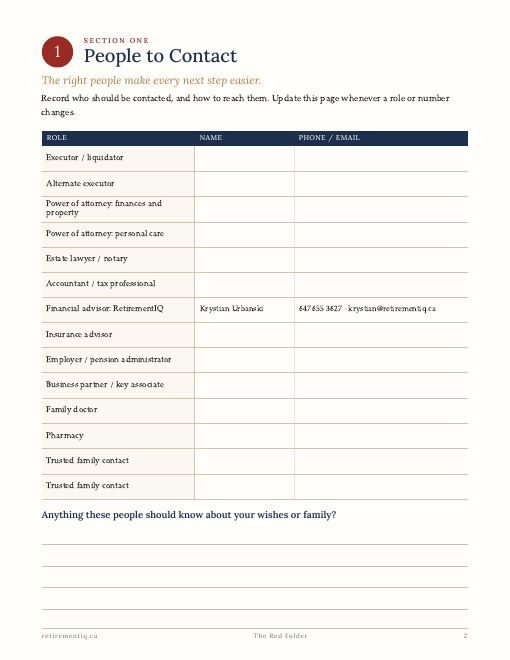
Executor, powers of attorney, lawyer, accountant, advisor, doctor and trusted family.
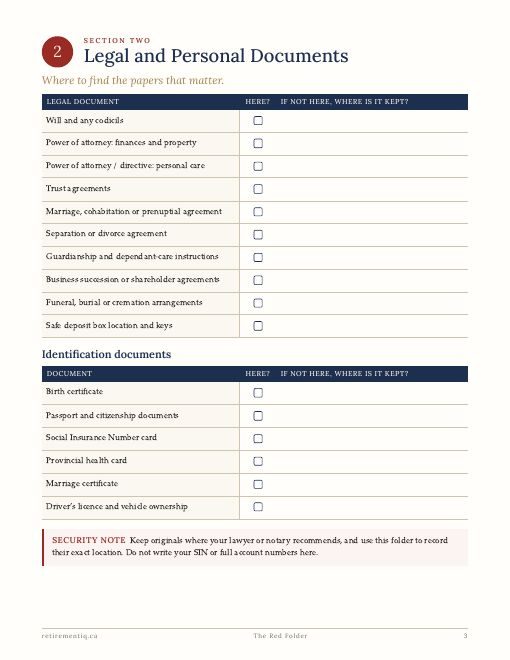
Where your will, powers of attorney, agreements and ID are kept.
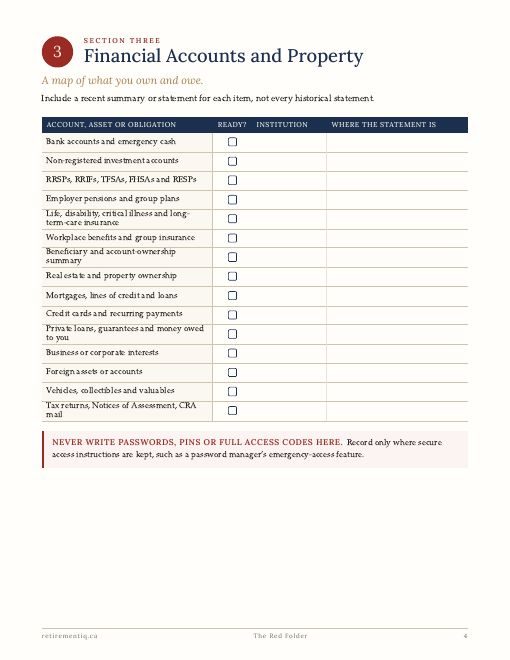
A map of what you own and owe, and where each statement is.
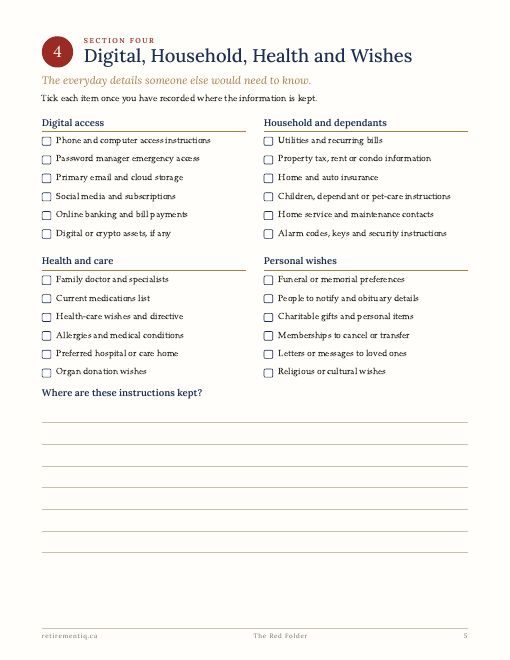
Device access, bills, medications, care wishes and funeral preferences.
A final page, Keep It Current, lists the life events that should prompt a review.
We will email you the printable Red Folder checklist. Print it, fill it in and keep it with copies of your documents.
Email me the checklistClients receive the RetirementIQ Red Folder at a review meeting, and we go through it together as part of the Family Continuity Review.
See the RiQ MethodNot sure what belongs in it, or whether your will, beneficiaries and powers of attorney line up? Book a complimentary Retirement Clarity Call.
Book a callEnter your name and email and we will send you the six-page printable checklist from Krystian Urbanski at RetirementIQ.
Your parents, a newly widowed friend, a sibling who just became an executor. Send them the link.
A single, clearly labelled folder that tells your family where everything is and who to call if you become ill, incapacitated or pass away. It holds a checklist and copies of key information: your executor and powers of attorney, where your will is kept, a map of your accounts and insurance, digital access instructions and your personal wishes.
At a minimum: your will and any codicils, powers of attorney for property and personal care, a list of bank, investment, registered and pension accounts, insurance policies, property and debt records, recent tax returns, and contact details for your lawyer, accountant and financial advisor. The Red Folder checklist walks through each one.
Usually not. Keep originals where your lawyer or notary recommends, such as their vault or a safe at home, and use the Red Folder to record exactly where they are. The folder holds copies and directions, not the originals.
No. It helps your family find the right documents and people quickly. Authority to act comes from your will and powers of attorney, so the first step for anyone opening the folder is to confirm who is authorized, then get legal and tax guidance before making major decisions.
No. Never write your Social Insurance Number, full account numbers, passwords or PINs in the folder. Record where secure access instructions are kept instead, for example a password manager’s emergency-access feature.
Somewhere safe but findable, such as a fireproof box at home. Tell at least one trusted person where it is. A folder no one can find does not help.
Review it once a year and whenever life changes: a marriage, separation, divorce, birth or death, a move to another province, a new account or property, or a change of executor or attorney.
The Red Folder helps your family find documents and people. It is not a legal document and does not give anyone authority to act. Rules differ by province; get legal and tax advice for your situation.