

July 2026, Special Market Update: Iran Conflict Escalates Again
Special Market Update
Iran Conflict Escalates Again: What Canadian Retirees Need to Know
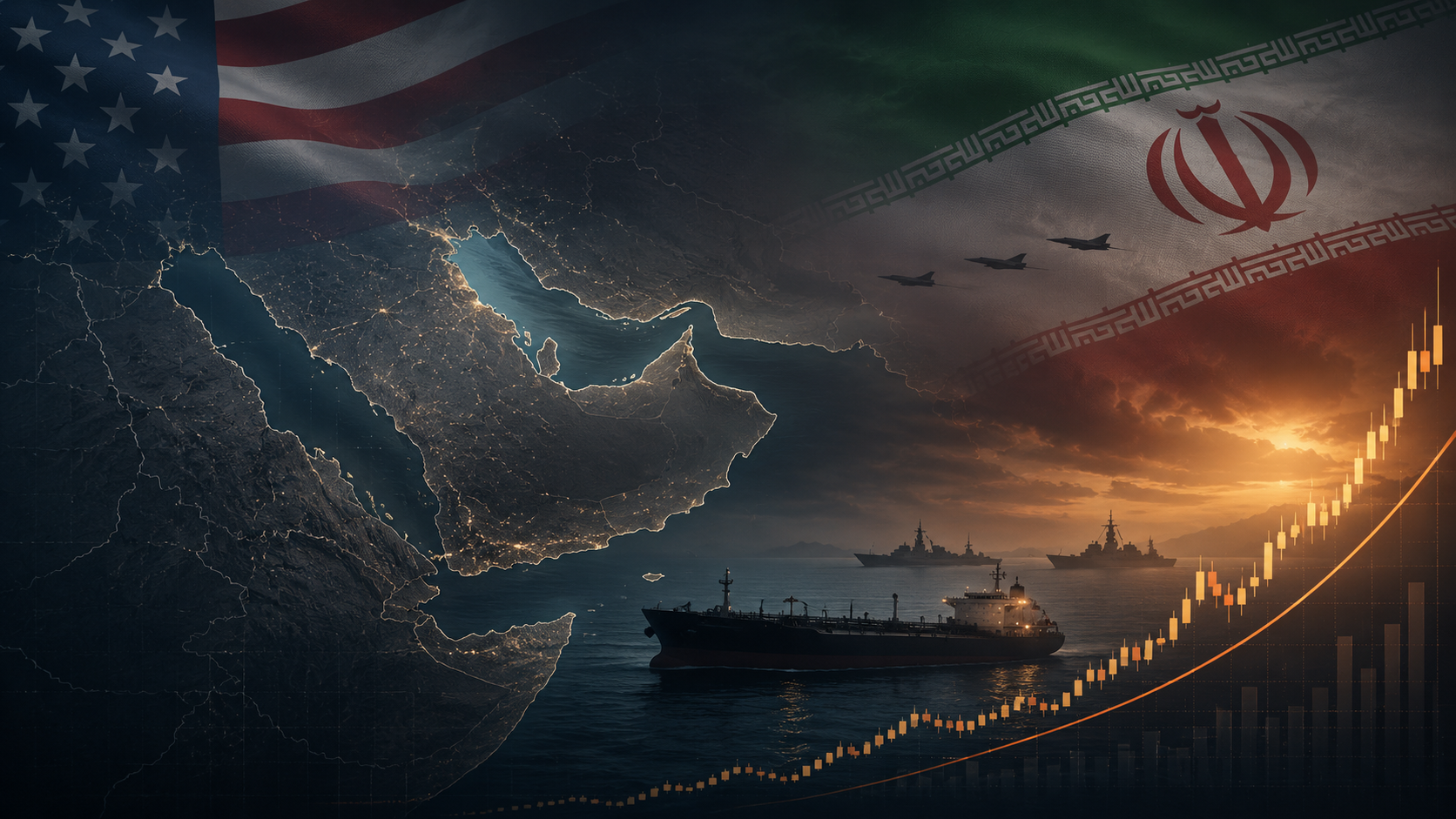
After several weeks of cautious optimism, tensions involving the United States and Iran have escalated again. The fragile understanding reached in June has deteriorated, military strikes have resumed, and the United States has reinstated a naval blockade affecting Iranian shipping. Iran has responded by threatening further disruption to major energy-export routes in the Middle East.
For investors, the central question is not simply whether the conflict is getting worse. It is whether the escalation will meaningfully interrupt the global supply of oil and natural gas, and what that could mean for inflation, interest rates and retirement portfolios.
Here is what Canadian retirees need to know right now.
What Has Changed?
In early July, renewed military action between the United States and Iran began undermining the temporary progress made in June.
The situation intensified further in mid-July when the United States launched additional strikes and reinstated a blockade of Iranian ports. Iran threatened to disrupt other energy-export corridors used by the United States and its allies, raising concern that the conflict could spread beyond the Strait of Hormuz to the Bab el-Mandeb passage near Yemen. These waterways are critically important to global trade.
Before the conflict, approximately one-fifth of the world’s oil and liquefied natural gas moved through the Strait of Hormuz. Shipping activity through the region has already fallen sharply, and insurers, tanker operators and energy companies are proceeding cautiously because of the heightened risk.
This means the risk to energy markets has increased again, but the market reaction has been different from what we saw earlier in the year.
Why Hasn’t Oil Risen Even More?
Oil prices moved higher following the renewed escalation, including a sharp weekly increase and a move to a one-month high. However, prices have not returned to the extreme levels reached during the initial phase of the conflict. There are several reasons.
First, global oil inventories appear more stable than feared.
Recent U.S. inventory data suggested that supplies were declining more slowly than expected. This gave investors some reassurance that oil was not immediately disappearing from the global market.
Second, markets have already lived through several months of this conflict.
In March and April, almost every escalation created a dramatic reaction because investors had little idea how serious the disruption might become. By July, markets had more information. Investors are now distinguishing between frightening headlines and actual reductions in energy supply.
Third, traders still believe some shipping will continue.
Although traffic through the Strait of Hormuz remains severely restricted, some vessels continue to move through the region. Markets are therefore pricing in disruption—but not yet a complete and prolonged shutdown. This does not mean the risk has disappeared. It means the market is becoming more selective about which developments truly threaten supply.
What Does This Mean for Canada?
For Canada, higher oil prices create both winners and losers.
Canadian energy producers may benefit.
Higher oil prices can improve revenues, cash flow and dividend capacity for Canadian oil and gas companies. This may support parts of the TSX and provide a partial buffer for Canadian investors.
But Canadian households may pay more.
Higher energy prices can increase:
- Gasoline costs
- Airfare and travel expenses
- Transportation and delivery costs
- Food prices
- Heating and utility expenses
This is particularly important for retirees because many live on a relatively fixed income. A portfolio may benefit from rising energy stocks while the retiree simultaneously experiences higher everyday expenses. That is why investment performance and retirement purchasing power must be considered together.
The Bank of Canada Holds at 2.25%
On July 15, the Bank of Canada maintained its policy interest rate at 2.25%.
The Bank said Canada’s economy remains weak but is showing signs of improvement. It expects growth to strengthen and inflation to move toward approximately 2%, although uncertainty remains elevated. The Iran conflict makes the Bank’s job more difficult.
Higher oil prices can slow economic growth while also increasing inflation. That creates a challenging environment because the Bank may be reluctant to lower rates if energy costs are pushing prices higher.
The Bank’s recent business survey also found that Canadian firms are facing elevated fuel costs, weaker domestic sales expectations and higher inflation expectations, while commodity exporters have become more optimistic.
For retirees, this suggests that interest rates may remain relatively stable for now, but the path forward is less predictable than it appeared a few weeks ago.
How Are Markets Responding?
Markets have been volatile, but they have not collapsed. The TSX suffered its largest one-day decline in approximately a month on July 8 as renewed U.S.-Iran tensions unsettled investors. By July 13, the index remained near historically elevated levels, even as materials and gold-related stocks came under pressure.
- Global markets have shown a similar pattern.
- Oil prices rose.
- Bond yields moved higher as inflation concerns returned.
- Some defensive assets strengthened.
- Yet technology and other growth-oriented sectors continued to perform when corporate earnings and economic data were supportive.
This tells us something important:
The conflict matters, but it is not the only thing driving markets. Corporate earnings, inflation, interest rates and economic growth still matter too.
What Should Canadian Retirees Do Right Now?
Do not make major portfolio changes based on one week of headlines.
The situation is serious, but rapid portfolio changes made during periods of fear often create more risk than they remove.
Review your exposure to energy.
Canadian investors often already own considerable energy exposure through Canadian equities, dividend funds and broad-market ETFs. Before adding more, determine how much exposure you already have.
Maintain a reliable cash-flow reserve.
Having two to four years of planned withdrawals available through cash, short-term bonds or other stable investments can help prevent forced selling during volatile markets.
Protect against inflation, but don’t abandon growth.
Retirees need assets that can help preserve purchasing power, but they also need long-term growth to support a retirement that may last several decades.
Diversify beyond one country and one outcome.
A well-built retirement portfolio should not depend entirely on:
- Oil continuing to rise
- Interest rates falling
- Canadian markets outperforming
- The conflict ending quickly
The portfolio should be capable of functioning under several different scenarios.
A Simple Perspective
In March, investors feared that the Strait of Hormuz could become completely unusable. In June, markets believed peace efforts might restore normal shipping. In July, the conflict escalated again.
That sequence reminds us why predicting geopolitics is so difficult. The objective is not to build a portfolio that correctly predicts every turn in the conflict. The objective is to build a portfolio that does not require us to.
What We Are Watching Next
Over the coming weeks, four developments will matter most:
- Whether the renewed blockade materially reduces Iranian oil exports
- Whether disruption spreads to the Bab el-Mandeb and Red Sea shipping routes
- Whether oil prices remain elevated long enough to affect Canadian inflation
- Whether the Bank of Canada’s outlook changes as energy and geopolitical risks evolve
This conflict remains fluid, and further volatility is possible. But volatility alone is not a reason to abandon a disciplined retirement strategy. For Canadian retirees, the best response remains a diversified portfolio, a dependable income plan and enough liquidity to avoid reacting emotionally to every headline.
Retirement investing is not about predicting the next crisis. It is about being financially prepared when uncertainty arrives.